GRAVÜR DÜNYASI
Digital Engraving Library
| Artist | J. Cramb (Photographer-Fotoğrafçı) |
| Engraver | E. Radclyffe |
| Date | 1860`s |
| Technique | Steel Engraving - Sepia toned |
| Category | Uncategorized |
| Source | William Collins, Glasgow |
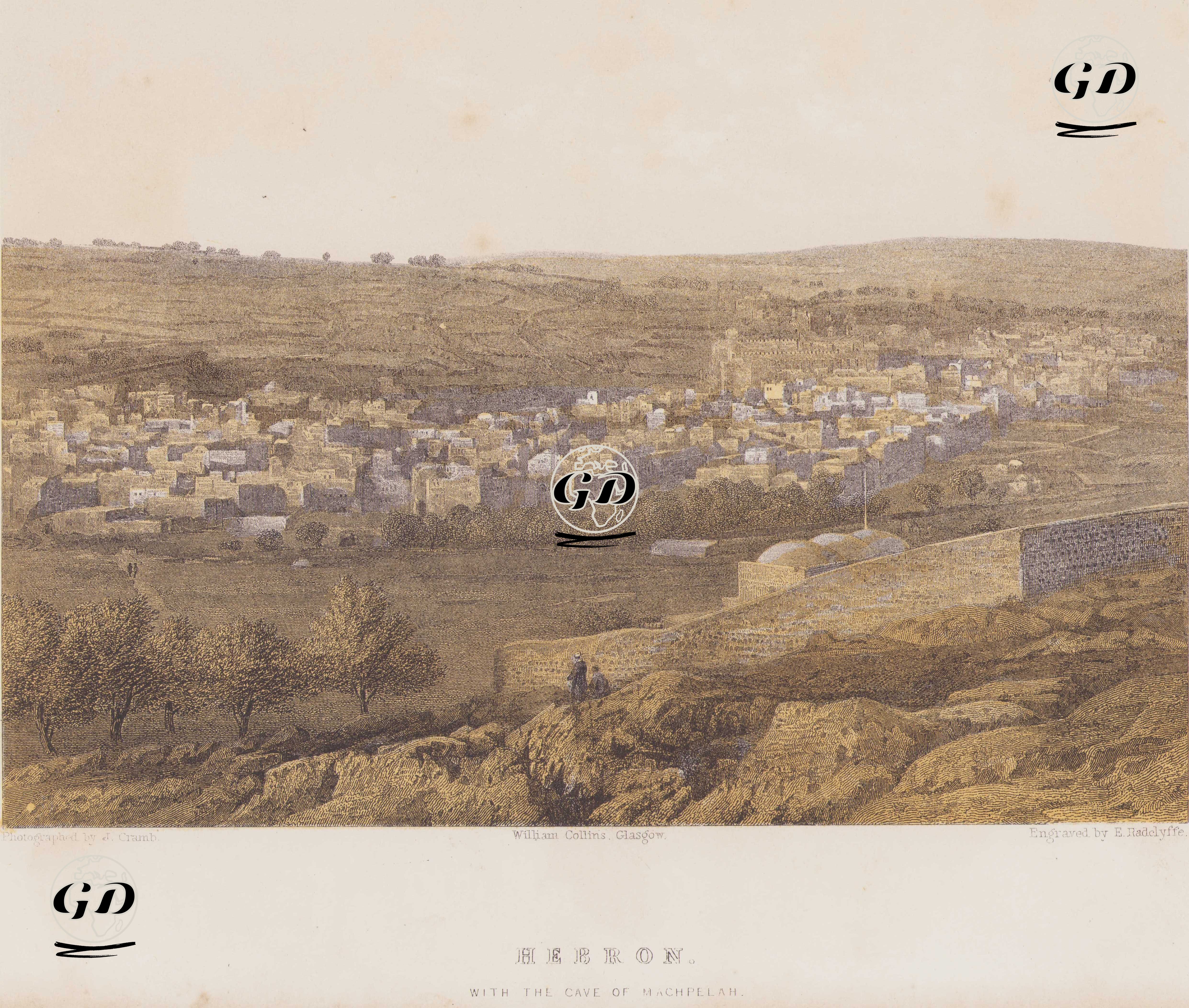
This engraving depicts Hebron (Al-Khalil), one of the holiest cities of both biblical geography and the Abrahamic religions, and the Cave of Machpelah. The engraving presents the dense texture of the ancient city's stone structures within the serene landscape of the surrounding hills, while also highlighting the architectural mass of the Cave of Machpelah (Cave of the Patriarchs), highlighting the region's spiritual significance. Located in southern Palestine, approximately 30 kilometers south of Jerusalem, Hebron is one of Palestine's oldest settlements and has historically been a sacred site for Judaism, Christianity, and Islam. According to the Torah (Genesis 23:1–20), Abraham purchased the Cave of Machpelah from the Hittite Ephron as the tomb of his wife, Sarah, and over time, the site became a sacred necropolis where Abraham, Isaac, Jacob, and their wives were also buried. Known as the "Tomb of Abraham Avinu" in Jewish tradition and "Al-Haram al-Ibrahimi" in Islamic tradition, this structure is revered as the tomb of the ancestors for Jews and the Mosque of Abraham for Muslims. The large, square-shaped fortification structure seen in the center of the engraving is the stone-walled monumental complex built by King Herod in the 1st century BC, covering the Cave of Machpelah. This structure reflects the monumental stonework of Roman architecture, while its upper sections were completed with arches and minarets added during the Islamic period. This layered structure symbolizes both the continuity of Abrahamic traditions and the intertemporal epoch of sacred space. Today, it serves as both a synagogue and a mosque. The dense stone architecture seen in Hebron's Old City remained virtually unchanged until the end of the 19th century, and the appearance in this engraving largely reflects its historical authenticity. The farmland and olive trees in the foreground allude to the city's pastoral identity, which has persisted since the age of the proph