GRAVÜR DÜNYASI
Digital Engraving Library
| Artist | J. Cramb (Photographer-Fotoğrafçı) |
| Engraver | R. Dawson |
| Date | 1860`s |
| Technique | Steel Engraving |
| Category | Uncategorized |
| Source | William Collins, Glasgow |
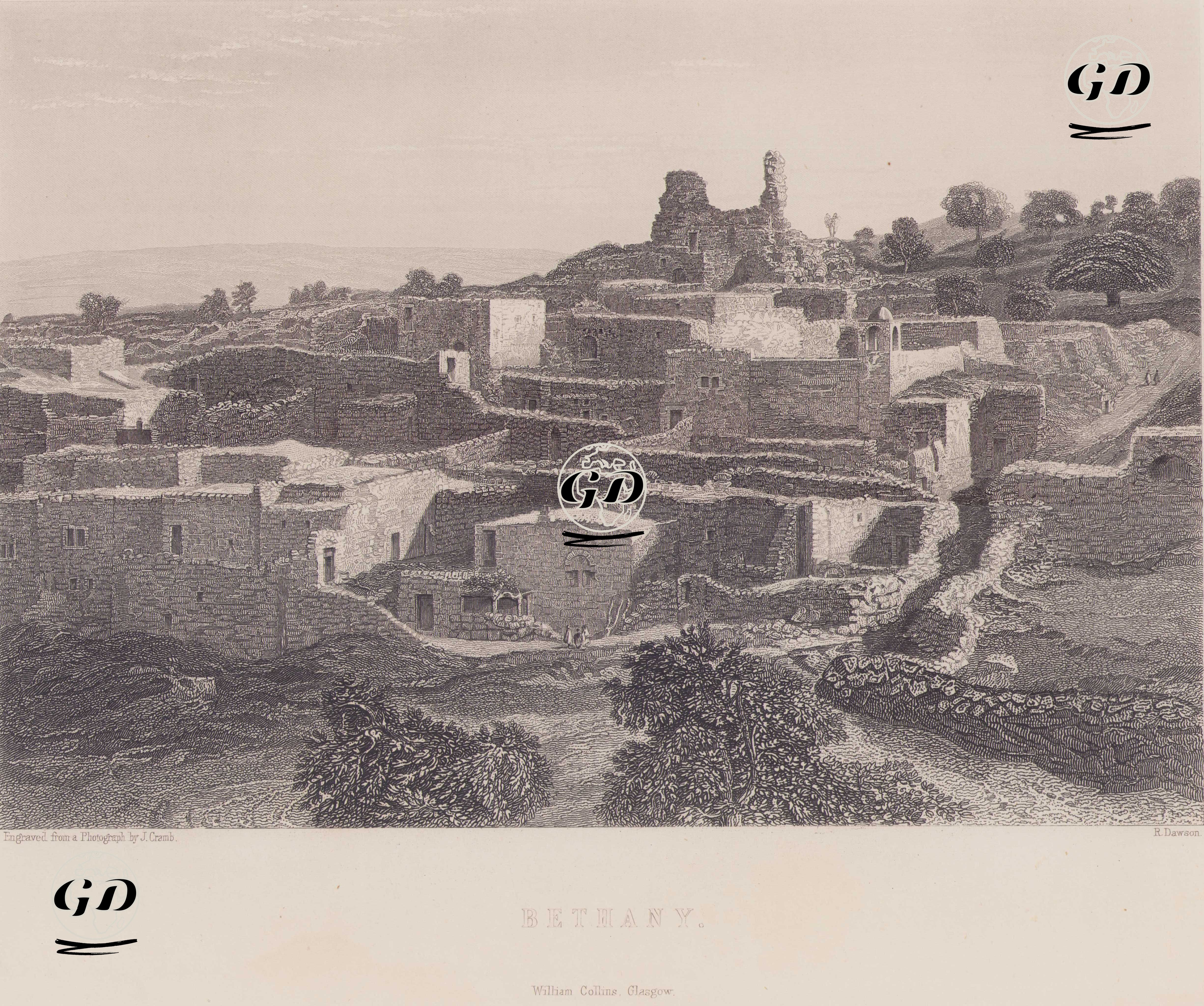
This engraving depicts the village of Bethany (now known as al-Eizaria), located on the eastern slopes of the Mount of Olives, approximately 3 kilometers east of Jerusalem. This ancient settlement holds great sacred significance in both biblical narratives and early Christian tradition. Bethany is frequently mentioned in the New Testament as the home of Mary, Martha, and Lazarus, Jesus' close friends. The "miracle of the resurrection of Lazarus," described in the 11th chapter of the Gospel of John, took place in this village. This event is considered one of the most important miracles, foreshadowing the theme of Jesus' death and resurrection. In the background, the ruins of the hill where the Tomb of Lazarus, believed to be the setting of this sacred narrative, can be seen. Bethany, also known as Jesus' final stop before entering Jerusalem, holds great significance in the early Christian pilgrimage tradition. This settlement, referred to as Bethania in ancient sources, means "house of bitter herbs" in Aramaic; some theologians believe the name also means "house of the poor." A basilica-style Church of Lazarus was built here during the Roman and Byzantine periods, and was later rebuilt during the Crusader period. The Tomb of Lazarus and its surrounding ruins, still standing today, document the continuity of the stone architecture seen in the engraving.