GRAVÜR DÜNYASI
Digital Engraving Library
| Artist | J. Cramb (Photographer-Fotoğrafçı) |
| Engraver | J. Brodie (oyma) |
| Date | 1860`s |
| Technique | Steel Engraving |
| Category | Uncategorized |
| Source | William Collins, Glasgow |
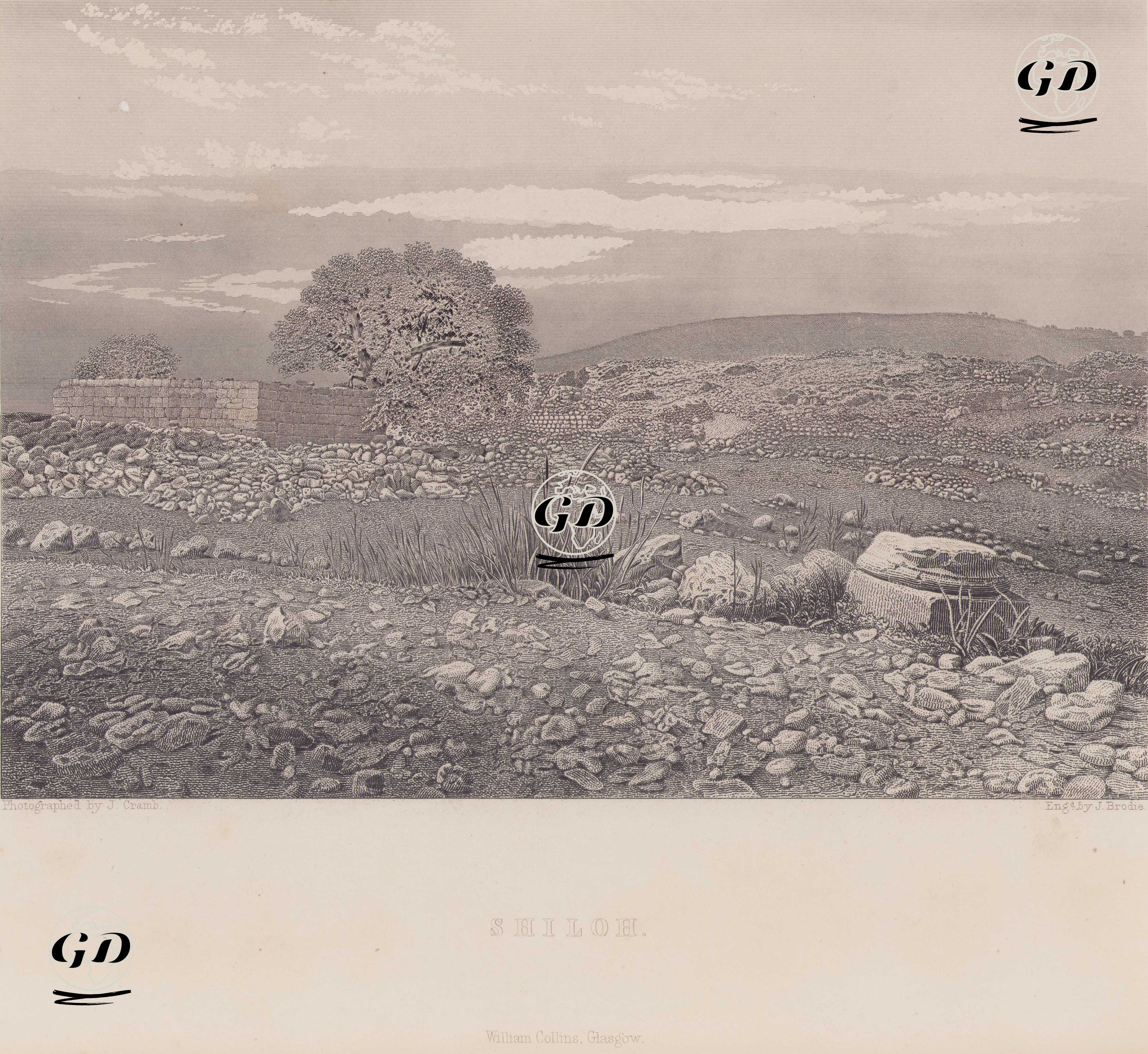
This engraving depicts the ancient settlement of Shiloh, a site frequently mentioned in the Old Testament and an important sacred center dating back to the earliest periods of Israelite history. The engraving presents the ruins of stone walls rising from the ground and the surrounding rural landscape in a quiet yet profound historical atmosphere. The ancient city of Shiloh is located in the northern part of the modern-day West Bank, between Ramallah and Nablus. It served as the Israelites' most important religious center from the 12th to 11th centuries BC. After the conquest of Canaan, the first Tabernacle (Mishkan) for offerings to God was established here in this region of the Ephraim tribe. This tabernacle housed the Ark of the Covenant for many years (1 Samuel 3:21). According to biblical accounts, the Prophet Samuel spent his childhood here and received his first revelation from God at this sacred site. Thus, Shiloh became symbolic not only as a religious center but also as the birthplace of revelation and prophecy. The stone foundations in the engraving and the texture of the surrounding dry land evoke the archaeological continuity of ancient Shiloh. Excavations in the region have unearthed traces of settlements, city walls, pottery sherds, and archaeological finds of religious structures dating from the 20th century BC to the Roman period. These layers demonstrate that Shiloh was inhabited continuously from the Bronze Age to the Roman period.