GRAVÜR DÜNYASI
Digital Engraving Library
| Artist | W. H. Bartlett (1809–1854) |
| Engraver | Charles Cousen (1819-1889) |
| Date | 1840`s |
| Technique | Steel Engraving |
| Category | Uncategorized |
| Source | Bilinmiyor |
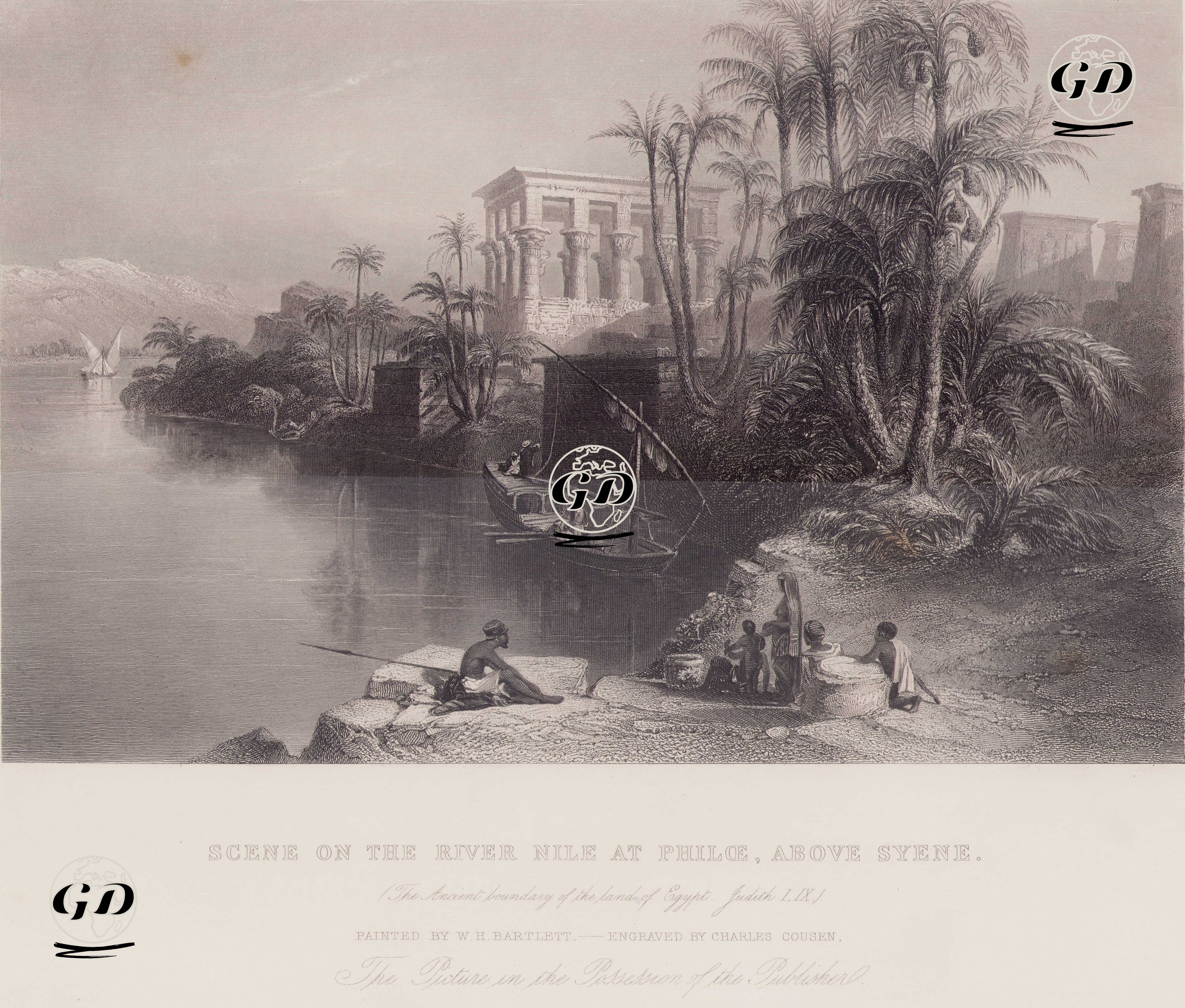
This engraving depicts the sacred island of Philae (Philae) near Aswan, in southern Egypt, and the surrounding archaeological fabric. At the center of the composition is the columned structure of the Temple of the Goddess Isis, a temple notable for its majesty on the banks of the Nile. The temple's elegant column capitals bear traces of the original architecture dating back to the Ptolemaic Dynasty (4th century BC). In the foreground, women drawing water on the banks of the Nile, men working on boats, and the daily lives of the local people are depicted. Felucas (sailboats) are seen on the river. Located on the cultural border between Egypt and Nubia in ancient times, Philae Island was considered sacred to both Egyptians and Nubians. According to Egyptian mythology, the goddess Isis searched the Nile for the dismembered body of her husband, Osiris, and resurrected him there. Therefore, the Temple of Philae became a symbolic place of death and rebirth. The structure was built during the Ptolemaic Dynasty. It expanded with additions made during the Roman period, reflecting a unique synthesis of Egyptian, Greek, and Roman artistic styles. Among the most recognizable sections of the temple complex are the Temple of Isis, the columned kiosk from the reign of Roman Emperor Trajan (Trajan's Kiosk), and the Temple of Hathor. The columned structure seen in the engraving is considered an idealized interpretation of this elegant Trajanic kiosk. Drawings by 19th-century European travelers portrayed the temple's romantic atmosphere with a sense of nostalgia, highlighting the theme of a "lost civilization." The most dramatic turning point in the modern history of the Philae Temple occurred during the construction of the Aswan Dam (1960–1970). When the temple faced the threat of being submerged by rising water levels, it was dismantled piece by piece and transported to the nearby island of Agilkia by an international salvage project led by UNESCO. This operation is considered one of the greatest engineering feats of modern archaeology. Today, the Temple of Philae, a UNESCO World Heritage Site, is one of the most visited archaeological sites in the Aswan region. Its location on the Nile represents Egypt's ancient cultural continuity, both historically and symbolically. With its nightly light and sound shows, the temple still evokes the magical atmosphere of ancient Egypt.