GRAVÜR DÜNYASI
Digital Engraving Library
| Date | 1802 |
| Technique | Copper Engraving |
| Category | Genre (Social Life) |
| Source | Modern And Authentic System Of Universal Geography, Containing An Accurate And Entertaining Description Of Europe, Asia, Africa And America, Being A Complete And Universal History And Description Of The Whole World (C.Cooke) |
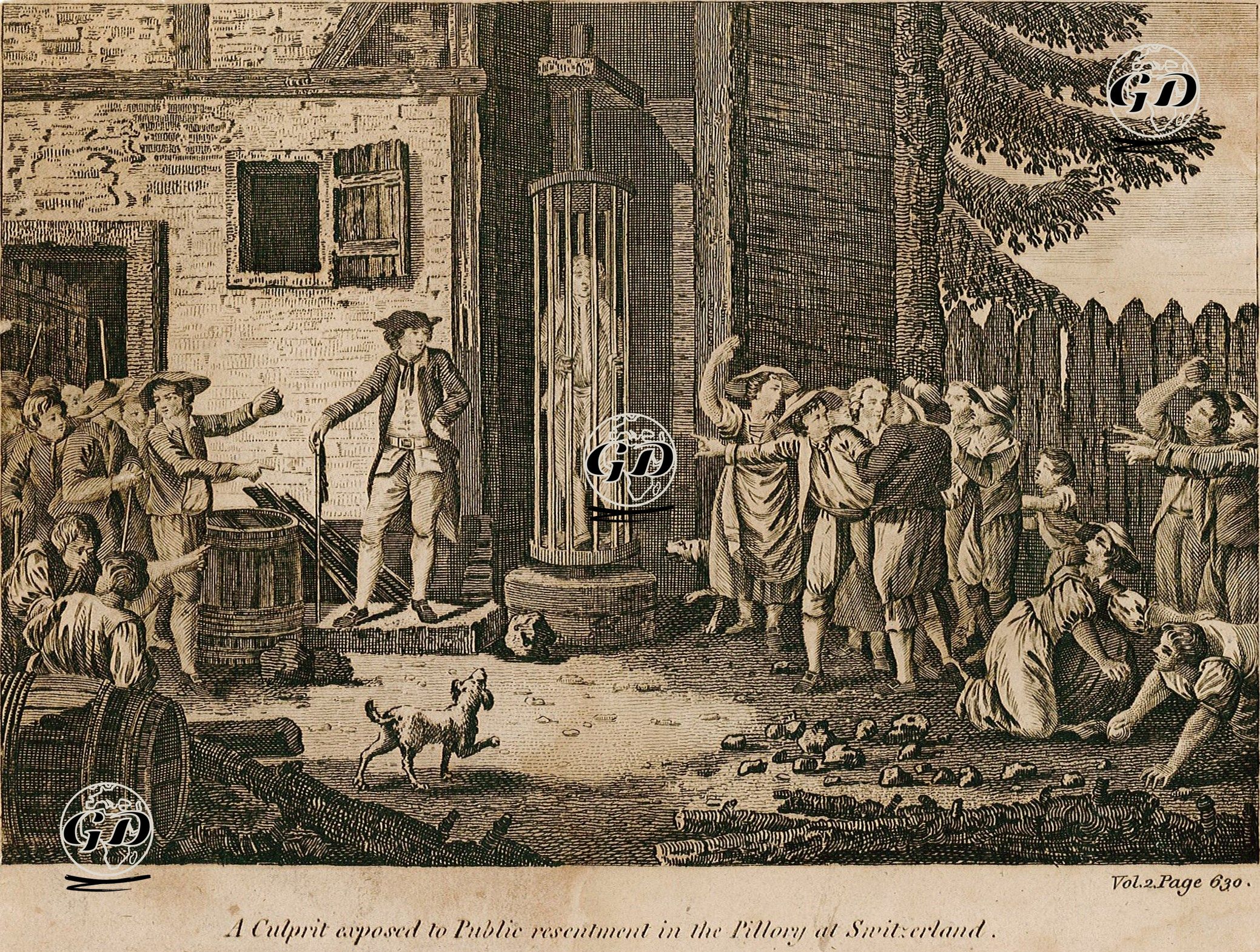
The engraving depicts the revolving cage punishment practiced in La Neuveville, Switzerland, in the late 18th century. Known as the Trillerhaus (or "Trülle"), the revolving cage punishment was practiced in early modern Europe, particularly in Switzerland. This system, which placed individuals guilty of minor offenses (such as drunkenness, brawling, theft, or immoral behavior) in a cylindrical cage with bars mounted on a rotating mechanism, aimed not only at imprisoning the offender but also at undermining their social standing by exposing them to public wrath and ridicule. In such punishments, offenders were often verbally abused, mocked, and sometimes humiliated by being hit with stones, food scraps, or excrement by the crowd. The crowd's animated and angry demeanor in the engraving clearly reflects this atmosphere of social lynching, while the cage's vertical structure and the criminal's helpless posture emphasize the individual's utter powerlessness in the face of public authority and the conscience of society. Figures crouching on the ground or shouting in anger further reveal the multifaceted psychology of the crowd and the social tension. The minimal use of background structures and environmental details directs the focus entirely on the punishment and the crowd's reactions. The practice of the Trillerhaus was widely used as a method of punishment in many places until the 19th century, and today it is revived as a frightening historical experience in medieval markets or festival scenes. In this context, the engraving demonstrates not only a scene of punishment but also how, in early modern European societies, even minor crimes were transformed into severe social sanctions through public shame and exposure.