GRAVÜR DÜNYASI
Digital Engraving Library
| Artist | Guido Reni (1575-1642) |
| Engraver | Henry Wallis (1806-1890) |
| Date | 1830's |
| Technique | Steel Engraving |
| Category | Religion |
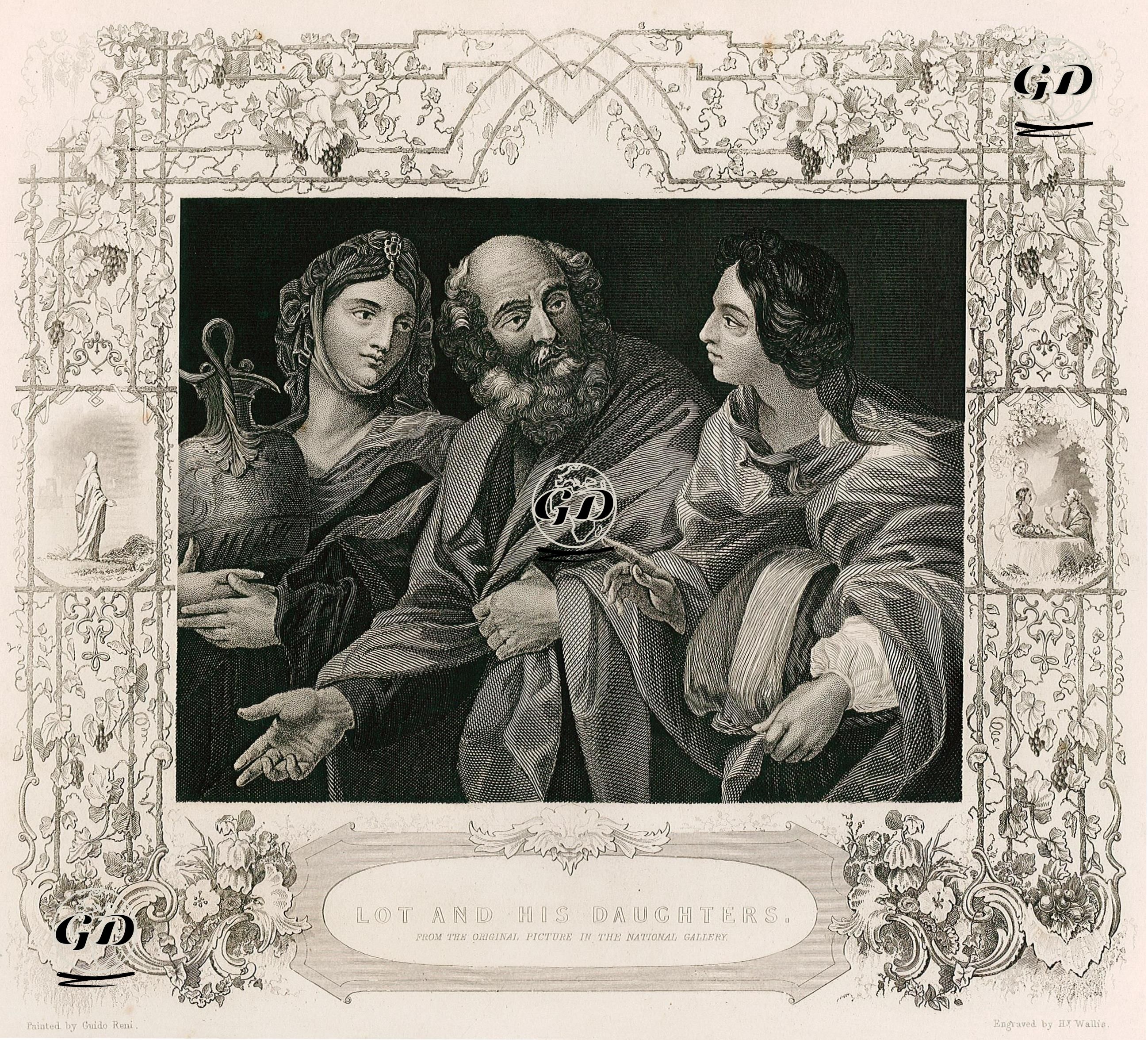
This engraving is based on a striking passage from verses 30 and following chapters of Genesis, the Old Testament of the Bible. This scene, richly symbolic and dramatic in terms of religious iconography, depicts the story of Lot and his two daughters, a small family of three who survived God's destruction of Sodom and Gomorrah. The male figure in the engraving is Lot, flanked by his daughters. One of the daughters holds a large jug in her hand, while the other appears to whisper something to her father. The scene's physical closeness, intimacy, and intertwined gazes create a psychological tension surrounding the unfolding events. The delicately ornamented frame on the left and right edges emphasizes the symbolic power of nature through ivy motifs, while other significant events in the story are depicted in miniature form in smaller scenes (such as the transformation of Lot's wife into a statue of salt in the lower left). This scene is seen as a representation not only of physical salvation but also of a moral test and a narrative that pushes the boundaries of human nature. To perpetuate their lineage, Lot's daughters make their father drunk and have children by him. This event finds a place in both the Bible and Christian iconography as a controversial, contradictory, and exemplary example.