GRAVÜR DÜNYASI
Digital Engraving Library
| Artist | Philip James de Loutherbourg (1740-1812) |
| Date | 1835 |
| Technique | Steel Engraving |
| Category | Religion |
| Source | The Holy Bible Containing Old and New Testaments to Which are Added Notes, illustrations and Practical Obsevations By The Rev. Matthew Henry |
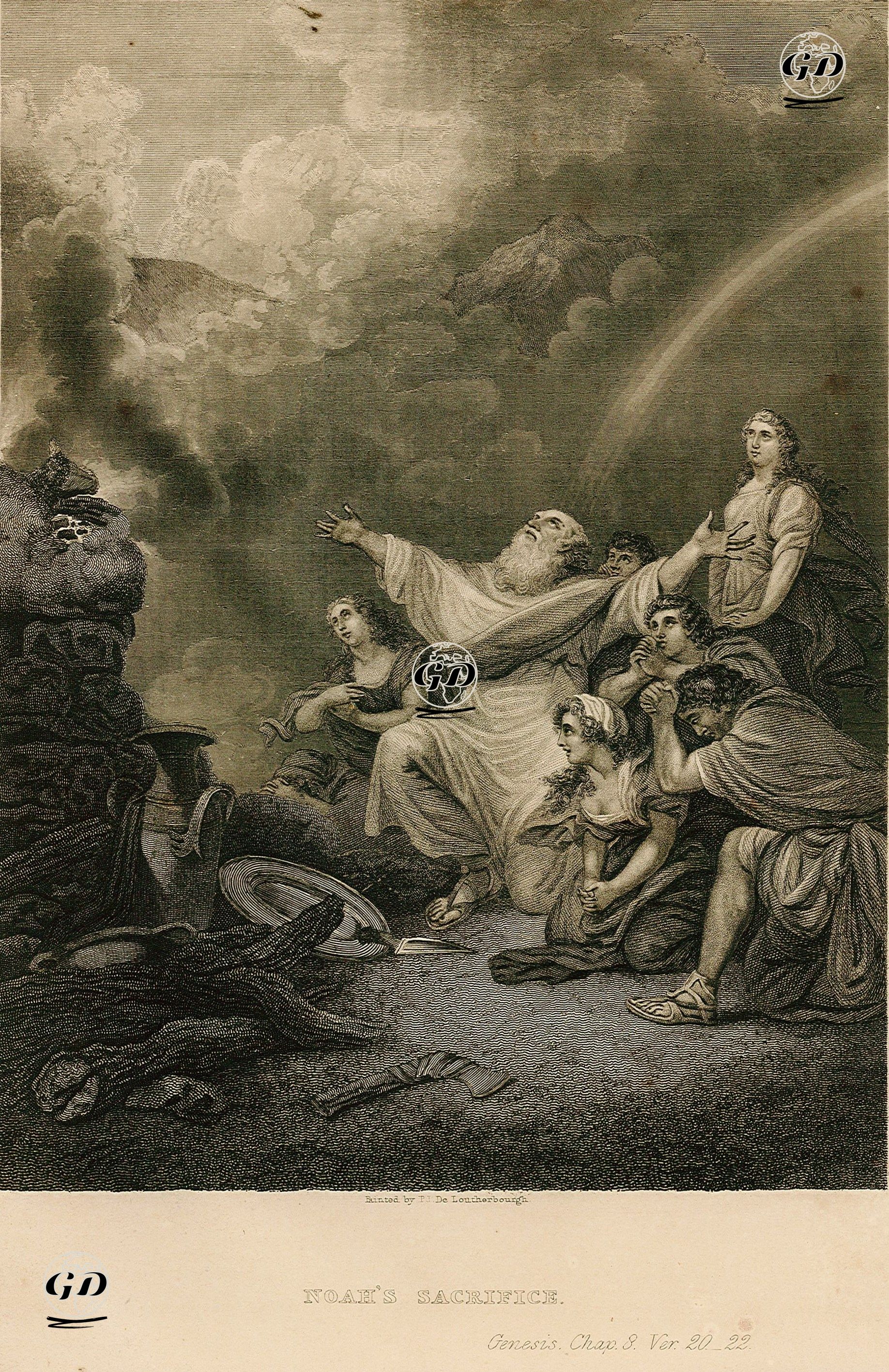
This engraving depicts Noah building an altar to God and offering thanks in a dramatic scene after the end of Noah's Flood. At the center of the composition, Noah is depicted with his hands raised to the sky, as if in prayer or giving thanks to God. This gesture is not only a physical expression but also a symbol of salvation, faith, and devotion. The male and female figures kneeling or gathered around him in prayer represent Noah's family, the family of humanity that survived the flood. The facial expressions of these figures are meticulously rendered. Feelings of gratitude, awe, humility, and worship are reflected in these faces. Smoke rises from the fire on the altar on the left, reaching toward the sky, while a rainbow prominently spreads into the sky behind. The rainbow is a symbol of God's covenant with Noah: his promise to "never again destroy the whole earth with a flood." The cloudy but no longer threatening sky in the background signals the end of the flood and the arrival of a new beginning. In religious terms, this scene visualizes not only physical salvation but also concepts such as repentance, rebirth, divine forgiveness, and devotion. In the engraving, Noah's leadership represents not only familial but also spiritual guidance, reestablishing a symbolic relationship with God as the first of the flood survivors.