GRAVÜR DÜNYASI
Digital Engraving Library
| Artist | Richard Westall (1765-1836) |
| Date | 1830's |
| Technique | Etching-Mezzotint |
| Category | Religion |
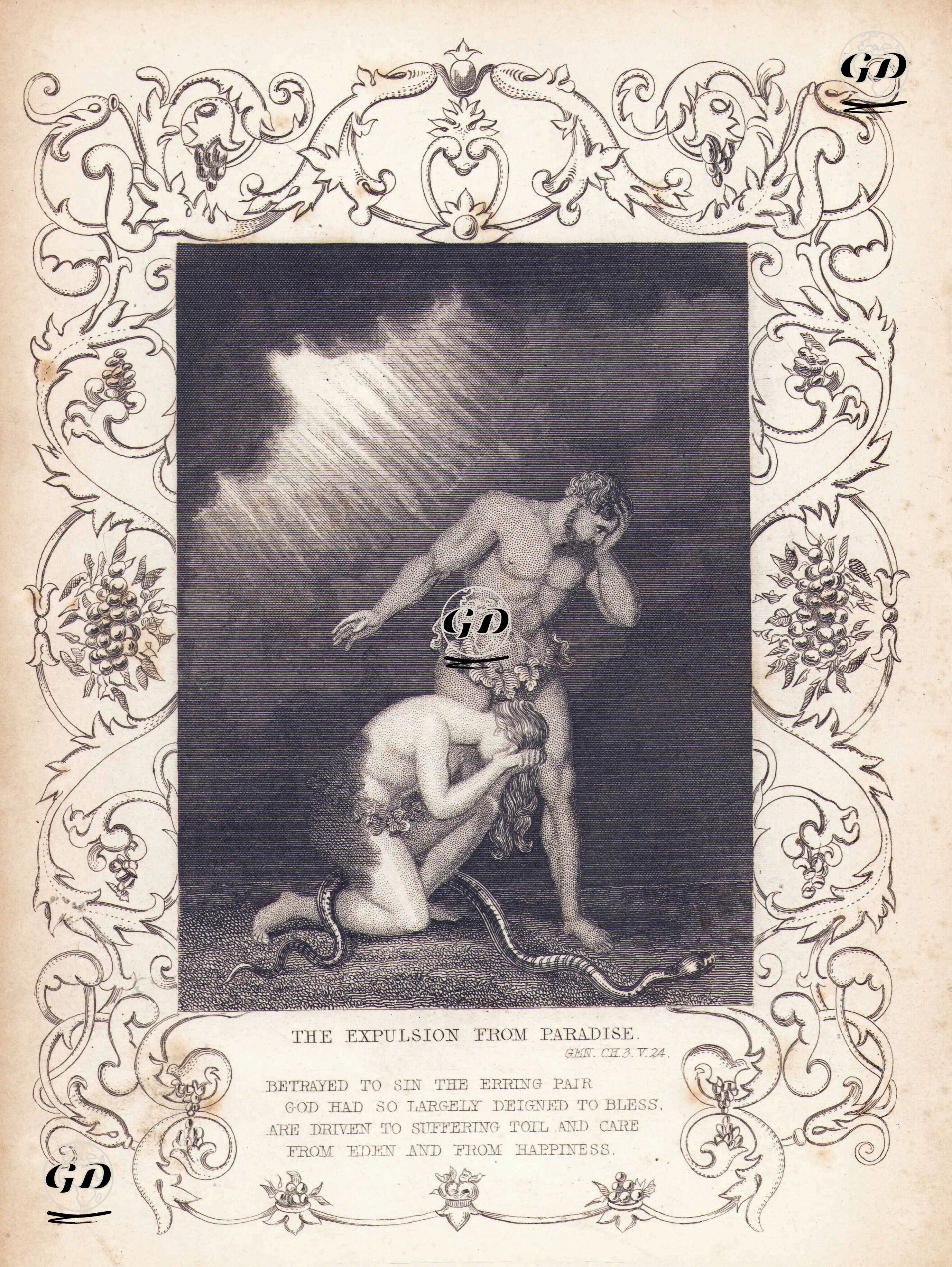
This engraving, titled "The Expulsion from Paradise," illustrates a profound theological and symbolic narrative based on Genesis, Chapter 3, verse 24 of the Old Testament. The engraving depicts Adam and Eve's expulsion from the Garden of Eden (Eden) for their original sin of disobeying God's command and eating the forbidden fruit. This scene represents the divine judgment and fall that follows the "original sin" in human history. The two figures at the center of the composition reflect humanity's transition from a state of innocence to a state of guilt, shame, and suffering. Adam, with his head in his hands, is depicted in deep remorse and shame, while Eve is depicted kneeling on the ground, bowed, and drowning in tears. The serpent, standing directly in front of the pair, remains a symbol of Satan. This symbolizes that the impact of sin is not merely past but still lingers. The rays of light from the upper section symbolize God's presence and absolute authority, while also bearing witness to the moment of divine judgment. This light, while representing God's justice, suggests that there is still a path to divine grace. In Christian theology, this scene symbolizes the dramatic moment that begins the process of man's separation from God, a process that will continue until the coming of Jesus as savior. Therefore, the engraving is not merely a visual but also an artistic representation of a spiritual rupture in human history.