GRAVÜR DÜNYASI
Digital Engraving Library
| Artist | John Martin (1789-1854) |
| Engraver | John Martin (1789-1854) |
| Date | 1831 |
| Technique | Etching-Mezzotint |
| Category | Religion |
| Source | The Paradise Lost by John Milton - London, James Sangster & Co. Belle Savuage Yard |
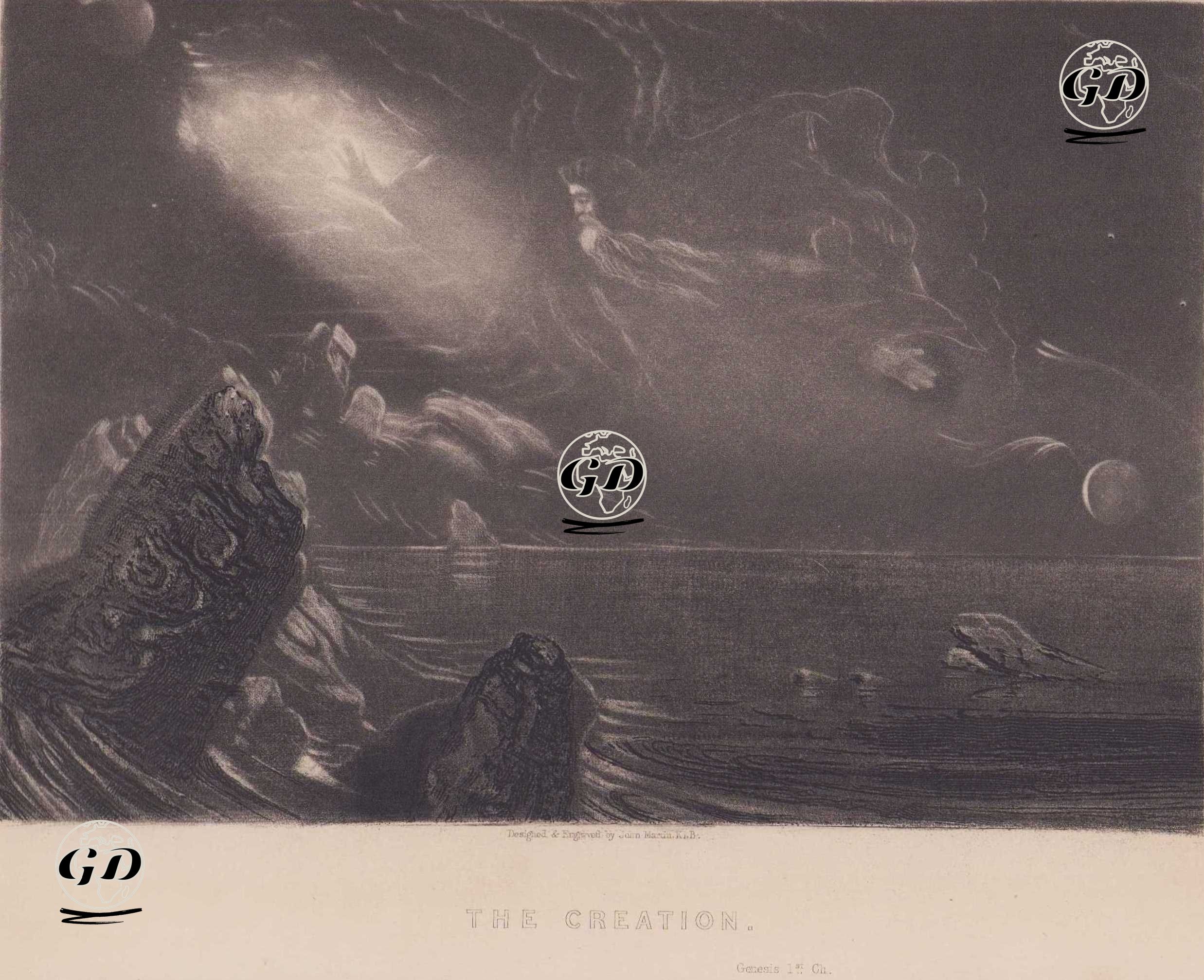
This engraving, titled "The Creation," is a religious allegory based on Genesis Chapter 1. The engraving depicts the first moments of God's creation of the universe, as described in the Bible, with a dramatic sky, divine light, and intense symbolism. At the center, the figure of God is depicted mighty, pierces the sky, and reaches toward the earth, his hand extended to represent his creative power. This engraving is an example of Western Christian iconography, where God is depicted anthropomorphically (in human form), in keeping with the religious romantic aesthetics of the 19th century. The clouds and shafts of light curling around God are an artistic reflection of his power, eternity, and divine energy. The dramatic light-and-shadow contrasts common in religious engravings of the period are used here to emphasize the divine power of creation. Below, a world of chaotic, unformed waters is depicted. The sacred text's statement, "In the beginning the world was desolate and void, upon abysses of darkness," is artistically brought to life in this engraving. Therefore, the engraving's purpose is not merely to represent a scene, but to reflect the sacred mystery of creation, the emergence of order from chaos by God's will, as a spiritual experience.