GRAVÜR DÜNYASI
Digital Engraving Library
| Artist | William Simpson (1823–1899) |
| Engraver | Thomas Picken (1815-1870) |
| Date | 1856 |
| Technique | Lithography, Sepia-toned |
| Category | Military |
| Source | The Campaign in the Crimea: An Historical Sketch by George Brackenbury, London, Published Oct. 1, 1856 by Paul & Dominic Colnaghi & Co., Day & Son Lithographers to the Queen |
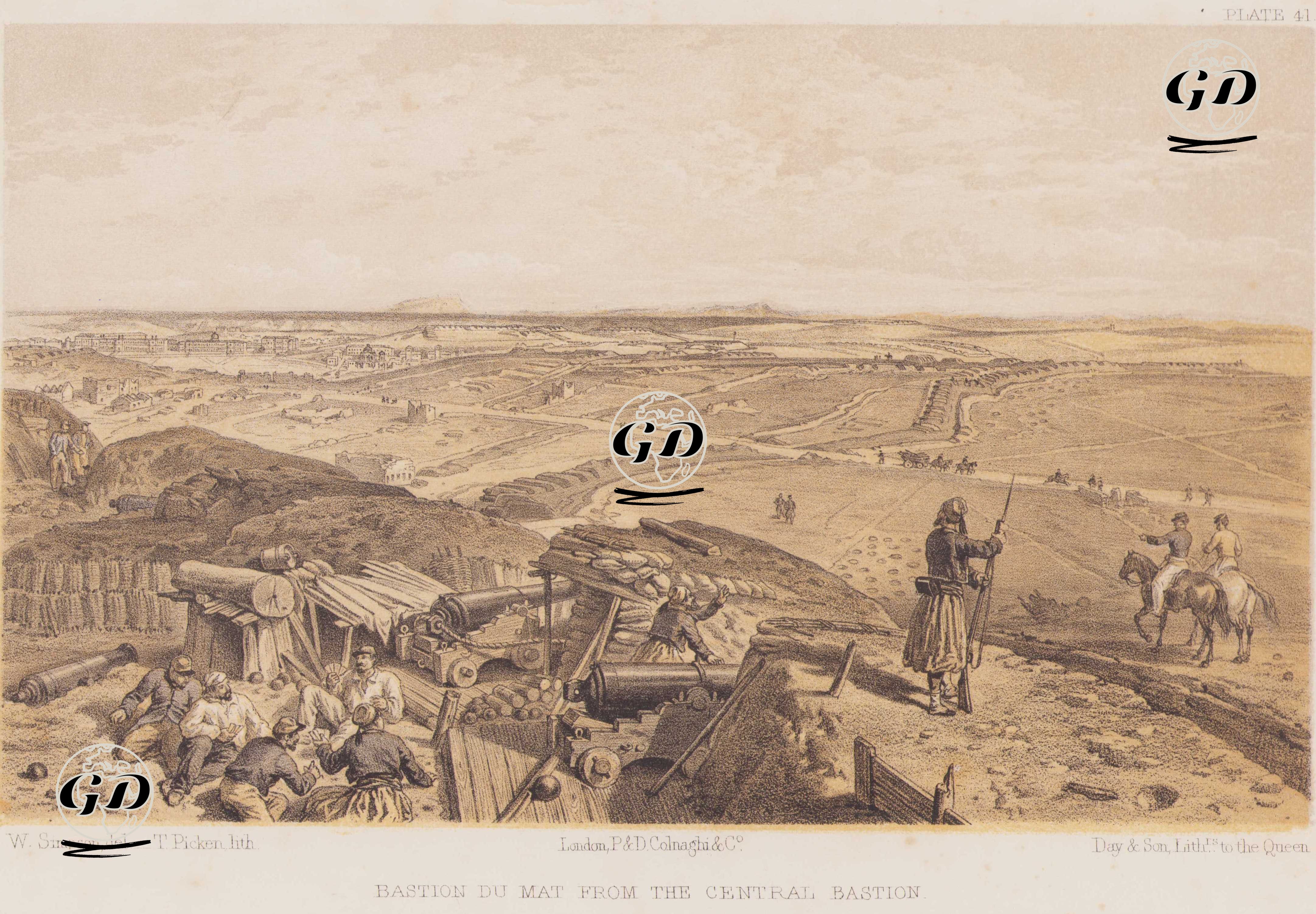
Bastion du Mat is an important Russian Army trench and artillery position located between the Malakoff Redif and the Redan fortifications in the southeastern defense of Sevastopol. Bastion du Mat was one of the points where the French and British troops had the most difficulty during the siege and were subjected to constant artillery fire. It became a symbol of the Russian resistance against the constant attacks of the Allies and was one of the most important elements of the complex fortification systems in the defense of the city. This engraving shows soldiers observing the opposing fortifications and battery positions from a central position (probably a French artillery position) further back facing Bastion du Mat. Cannons placed in the trench, artillery ammunition (cannonballs, powder boxes), sandbags and protective gabions (woven basket defensive structures), soldiers resting in the trench, and the cannon barrel lying on the ground because it was ineffective in the lower left corner are in the foreground. In the background, the Bastion du Mat and other fortifications, ruined buildings and roads, and the inner city of Sevastopol can be seen on a flat and wide terrain, showing how far the Allied army had to advance along the siege line. William Simpson, who painted this engraving, was a painter and engraver sent to the war zones on behalf of The Illustrated London News during the Crimean War.