GRAVÜR DÜNYASI
Digital Engraving Library
| Artist | William Simpson (1823–1899) |
| Engraver | Thomas Picken (1815-1870) |
| Date | 1856 |
| Technique | Lithography, Sepia-toned |
| Category | Military |
| Source | The Campaign in the Crimea: An Historical Sketch by George Brackenbury, London, Published Oct. 1, 1856 by Paul & Dominic Colnaghi & Co., Day & Son Lithographers to the Queen |
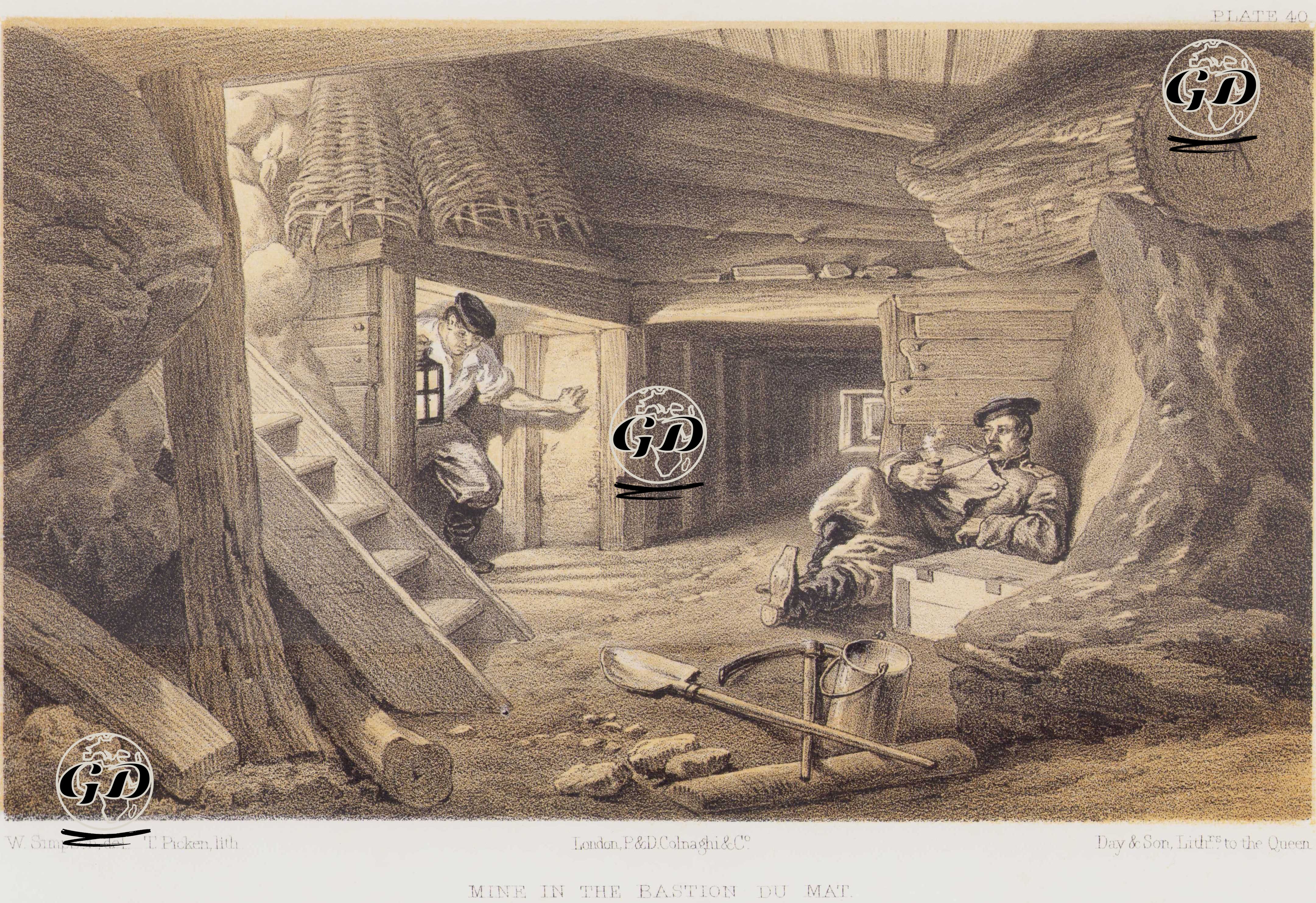
The engraving reveals the unseen underground face of siege warfare. Bastion du Mat is an important Russian Army trench and artillery position located between the Malakoff Redif and Redan fortifications in the southeastern defense of Sevastopol. Trench warfare and underground mine tunnels gained great importance as the French army attempted to capture it. The word “Mine” in the English title of the engraving does not mean a mine here, but rather the act of digging a tunnel and placing dynamite under enemy lines. In the Crimean War, both sides went beyond trench warfare and attempted to blow up the opposing side’s fortifications with mining and counter-mining methods. The engraving depicts the tunnels dug by the French to reach Bastion du Mat. The shovels, picks, buckets, and wooden supports in the engraving provide valuable information about 19th century military engineering and siege techniques. William Simpson, who painted this engraving, was a painter and engraver sent to the war zones on behalf of The Illustrated London News during the Crimean War.