GRAVÜR DÜNYASI
Digital Engraving Library
| Artist | William Simpson (1823–1899) |
| Engraver | Edmund Walker (1814-1882) |
| Date | 1856 |
| Technique | Lithography, Sepia-toned |
| Category | Military |
| Source | The Campaign in the Crimea: An Historical Sketch by George Brackenbury, London, Published Oct. 1, 1856 by Paul & Dominic Colnaghi & Co., Day & Son Lithographers to the Queen |
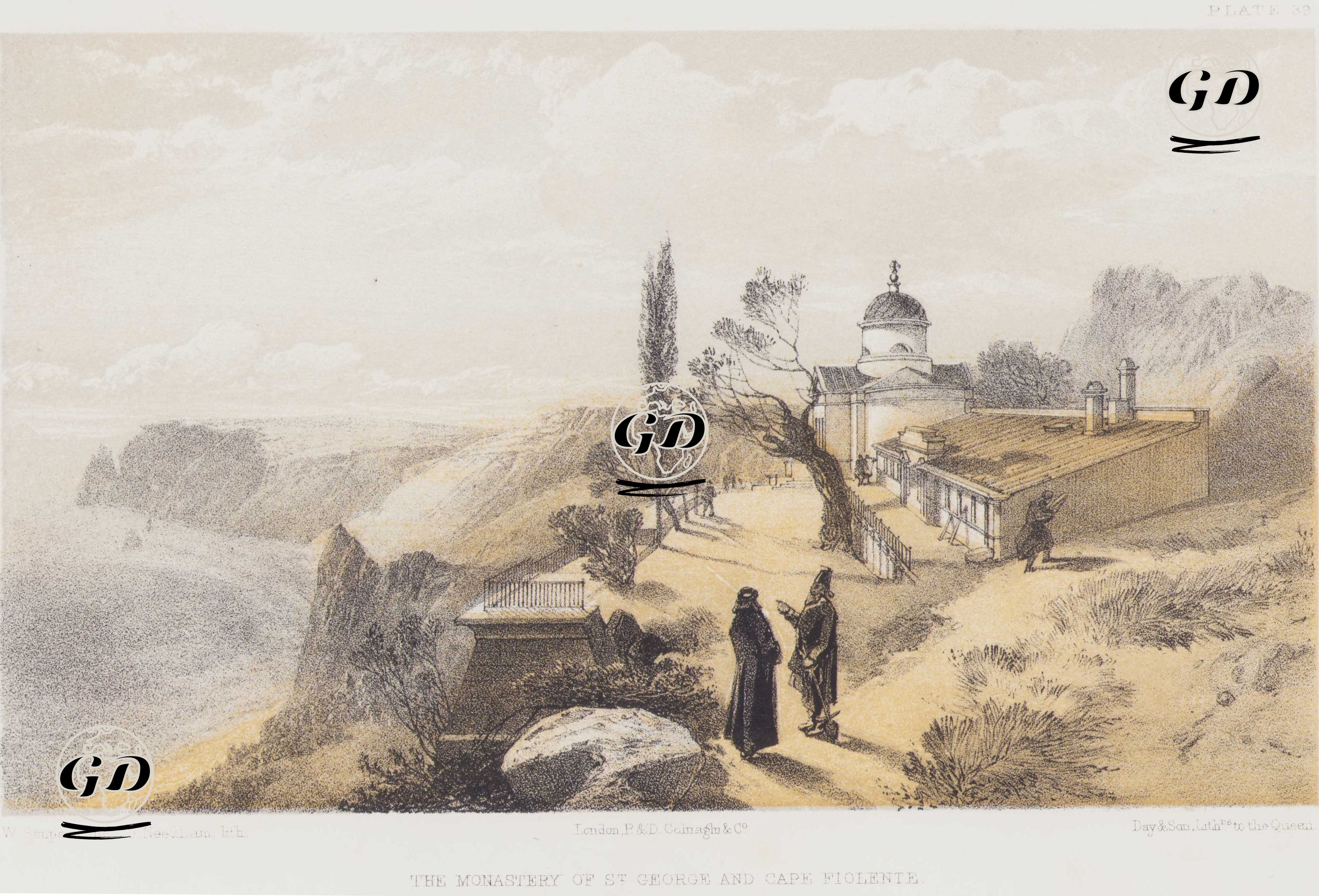
The engraving shows the historic St. George Monastery and Cape Violente, located on high cliffs overlooking the Black Sea at the southernmost tip of Sevastopol. Founded by Byzantine monks in the 9th century, the monastery has been the religious and spiritual center of Crimea for centuries, becoming an important pilgrimage site for both Orthodox Christians and Russians. According to legend, St. George performed a miracle here to save a ship caught in a storm. Built in memory of this event, the monastery’s architecture bears Byzantine and Russian Orthodox influences, while the surrounding nature offers endless views of the Black Sea. Active in the 19th century, the monastery remained off the battlefield during the Crimean War, serving as a place of shelter, seclusion, and religious peace. It also served only as a military observation post.William Simpson, who painted this engraving, was a painter and engraver sent to the war zones on behalf of The Illustrated London News during the Crimean War.