GRAVÜR DÜNYASI
Digital Engraving Library
| Artist | William Simpson (1823–1899) |
| Engraver | Thomas Picken (1815-1870) |
| Date | 1856 |
| Technique | Lithography, Sepia-toned |
| Category | Military |
| Source | The Campaign in the Crimea: An Historical Sketch by George Brackenbury, London, Published Oct. 1, 1856 by Paul & Dominic Colnaghi & Co., Day & Son Lithographers to the Queen |
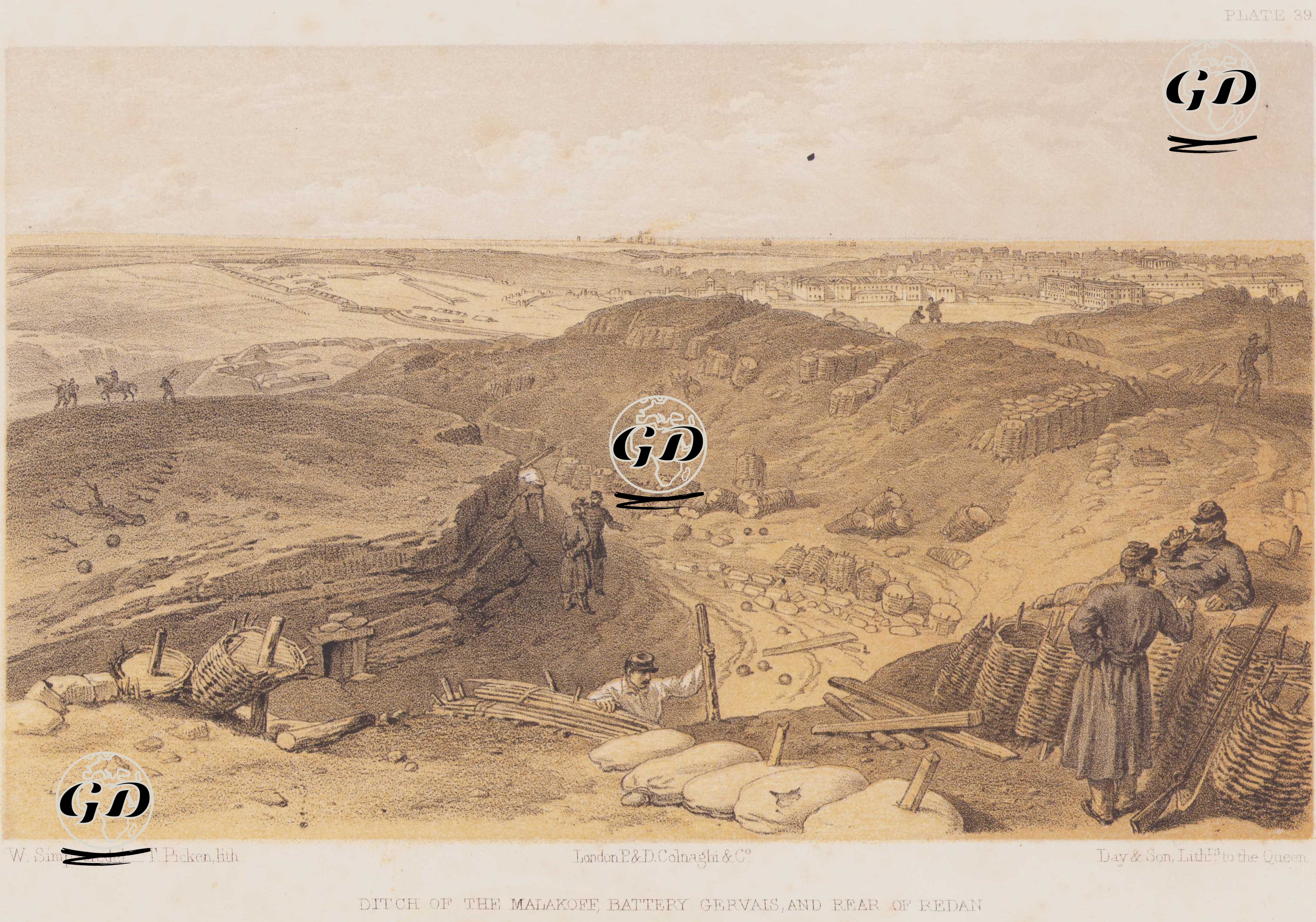
There were two important Russian defensive points in the siege of Sevastopol: the first was the Malakoff Tower, attacked by the French army, and the other was the Redan Fortification (The Great Redan), attacked by the British army. This engraving shows in detail the defensive lines, trenches and trench systems between these two targets. The "Gervais Battery" is one of the French artillery positions on the Malakoff. In the centre of the engraving is a deep trench, dug to protect against enemy fire and to advance. In the lower right corner are gabions (cylindrical trenches made of wicker filled with soil), sandbags, pickaxes, shovels and wooden supports. The daily activities and observation duties of the soldiers in the trenches reveal the difficulties of siege warfare and the constant vigilance required. The Malakoff and Redan fortifications were the backbone of the Russian defense, and the fall of the Malakoff on September 8, 1855, in particular, was the most critical moment in the process leading to the surrender of Sevastopol. William Simpson, who painted this engraving, was a painter and engraver sent to the war zones on behalf of The Illustrated London News during the Crimean War.