GRAVÜR DÜNYASI
Digital Engraving Library
| Artist | William Simpson (1823–1899) |
| Date | 1856 |
| Technique | Lithography, Sepia-toned |
| Category | Military |
| Source | The Campaign in the Crimea: An Historical Sketch by George Brackenbury, London, Published Oct. 1, 1856 by Paul & Dominic Colnaghi & Co., Day & Son Lithographers to the Queen |
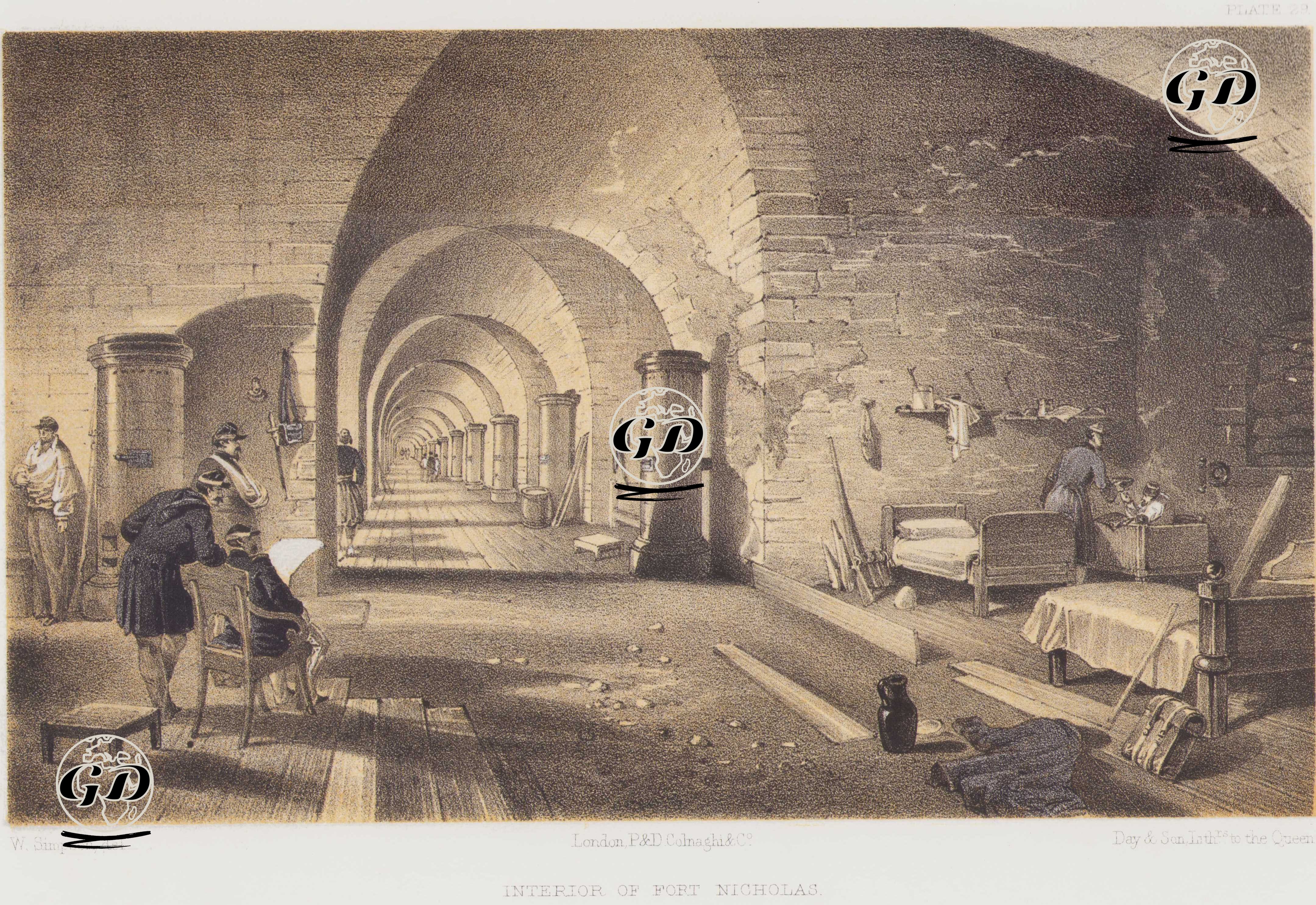
This engraving documents the interior of Fort St. Nicholas, a major fortification located at the southwestern end of Sevastopol Harbour. Fort St. Nicholas was one of two major forts, along with Fort St. Paul, that defended the entrance to Sevastopol Harbour. This coastal fortification played a key role in the western sea defence of Sevastopol, the base of the Russian Black Sea Fleet. During the siege, it prevented the British and French navies from entering the harbour directly. It was continuously reinforced throughout the siege for fear of attack by sea rather than by land. Fort St. Nicholas was captured by the Allies after the fall of the Malakoff in September 1855 and the evacuation of the city by the Russian army. The engraving was probably made during this period, when the structure was abandoned or unusable. The long vaulted corridors, dormitories for soldiers and military equipment reveal the importance of the fortress as both a shelter and a defensive point. William Simpson, who painted this engraving, was a painter and engraver sent to the war zones for The Illustrated London News during the Crimean War.