GRAVÜR DÜNYASI
Digital Engraving Library
| Artist | William Simpson (1823–1899) |
| Engraver | William Louis Walton (1808-1879) |
| Date | 1856 |
| Technique | Lithography, Sepia-toned |
| Category | Military |
| Source | The Campaign in the Crimea: An Historical Sketch by George Brackenbury, London, Published Oct. 1, 1856 by Paul & Dominic Colnaghi & Co., Day & Son Lithographers to the Queen |
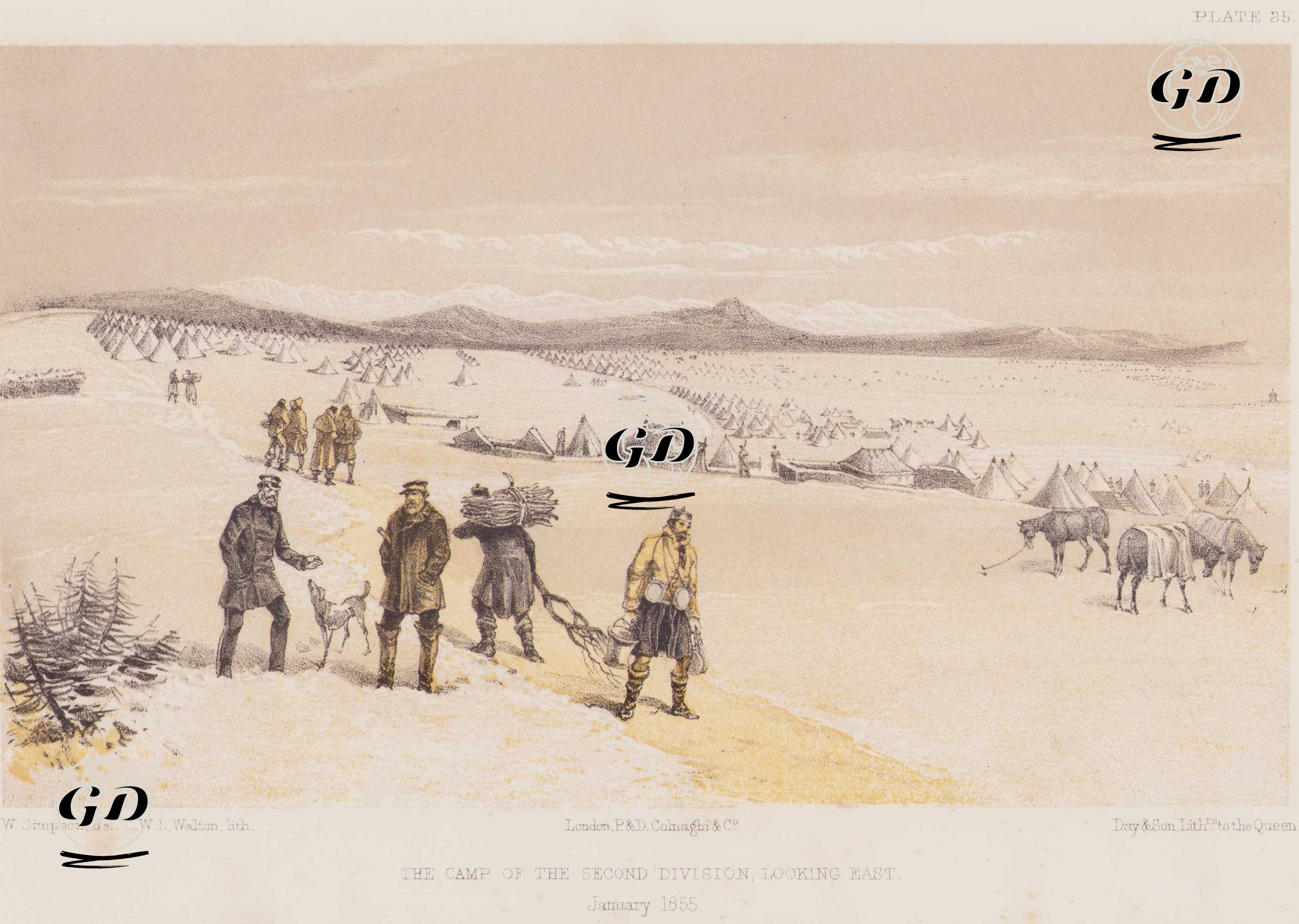
This engraving depicts the camp of the British Second Division, which participated in the siege of Sevastopol during the Crimean War, in January 1855. The perspective in the engraving is towards the east and it was recorded during one of the harshest winters of the war. A great storm on November 14, 1854 sank or severely damaged most of the British and French supply ships. In particular, the British winter provisions, tents, clothing and medical supplies were sunk in the Black Sea. Consequently, the British soldiers spent the winter of 1854-1855 under very difficult conditions with inadequate shelter, food and clothing. Thousands of soldiers died of disease, hunger and cold. In this scene, the artist William Simpson documents the life-and-death struggle with nature rather than the armed conflicts of the war. Because, as of January 1855, when the engraving was painted, most of the soldiers in the camp of the Second Division still did not have proper shelter, warm clothing and regular food. William Simpson, who painted this engraving, was a painter and engraver sent to the war zones for The Illustrated London News during the Crimean War.