GRAVÜR DÜNYASI
Digital Engraving Library
| Artist | William Simpson (1823–1899) |
| Engraver | Edmund Walker (1814-1882) |
| Date | 1856 |
| Technique | Lithography, Sepia-toned |
| Category | Military |
| Source | The Campaign in the Crimea: An Historical Sketch by George Brackenbury, London, Published Oct. 1, 1856 by Paul & Dominic Colnaghi & Co., Day & Son Lithographers to the Queen |
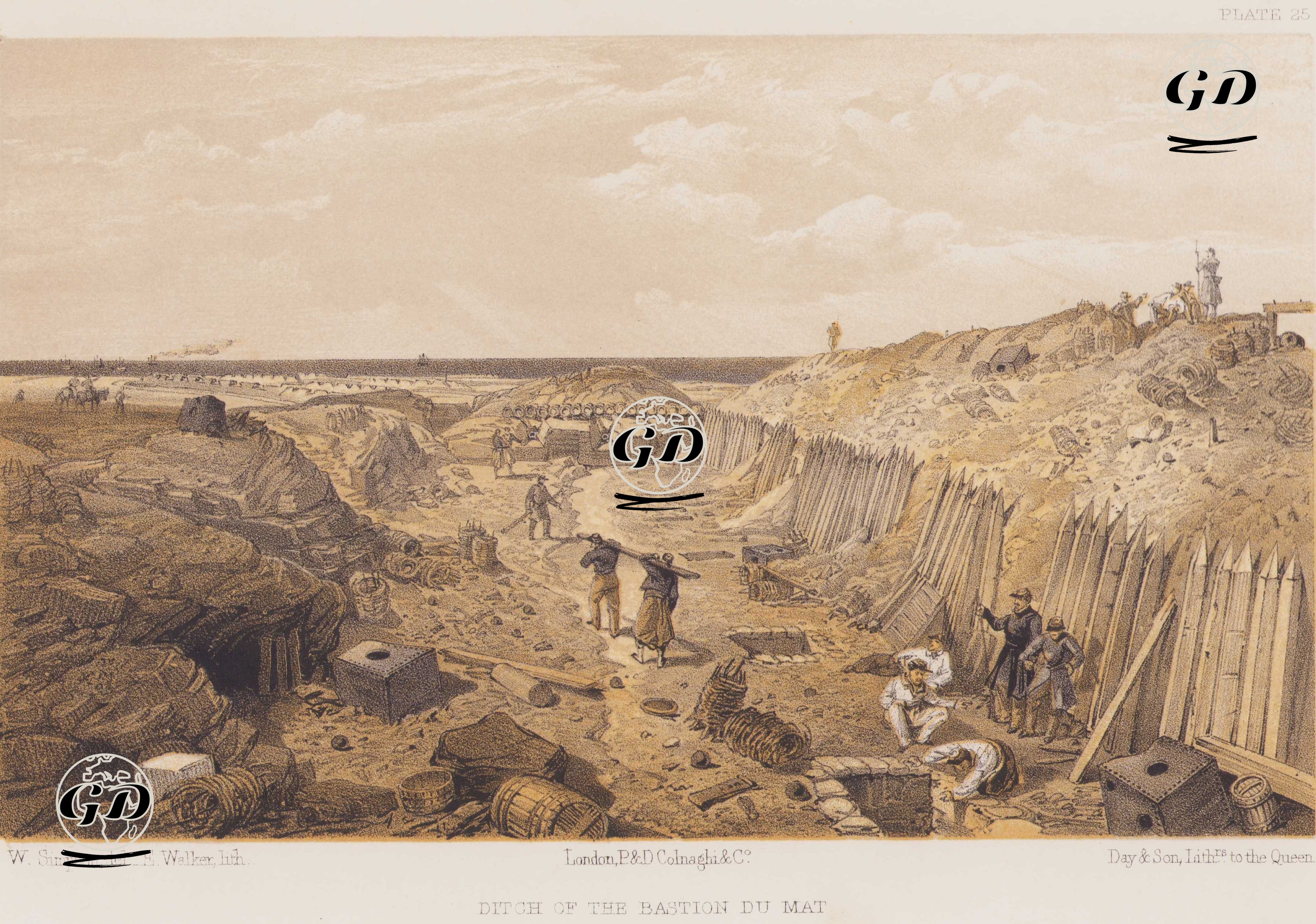
Bastion du Mat, along with other fortifications such as the Redan and Malakoff Redif, positioned in the southern defences of Sevastopol and overlooking the harbour, was a key point of Russian defensive resistance throughout the war. French and British troops carried out weeks of trench digging, night raids and artillery bombardment to reach these fortifications. During the general assault on 8 September 1855, fighting also took place around Bastion du Mat. However, the fortification itself had largely lost its military importance with the fall of the Malakoff, and the Russians were soon forced to evacuate Sevastopol. This engraving is a visual record of this evacuated position, now "non-strategic" but deeply etched in the memory of the war. The deep ditch seen in the engraving was dug to strengthen the defensive line against attack and was part of a complex defensive system including artillery batteries, trenches and observation points. William Simpson, who painted this engraving, was a painter and engraver sent to the war zones for The Illustrated London News during the Crimean War.