GRAVÜR DÜNYASI
Digital Engraving Library
| Artist | William Simpson (1823–1899) |
| Date | 1856 |
| Technique | Lithography, Sepia-toned |
| Category | Military |
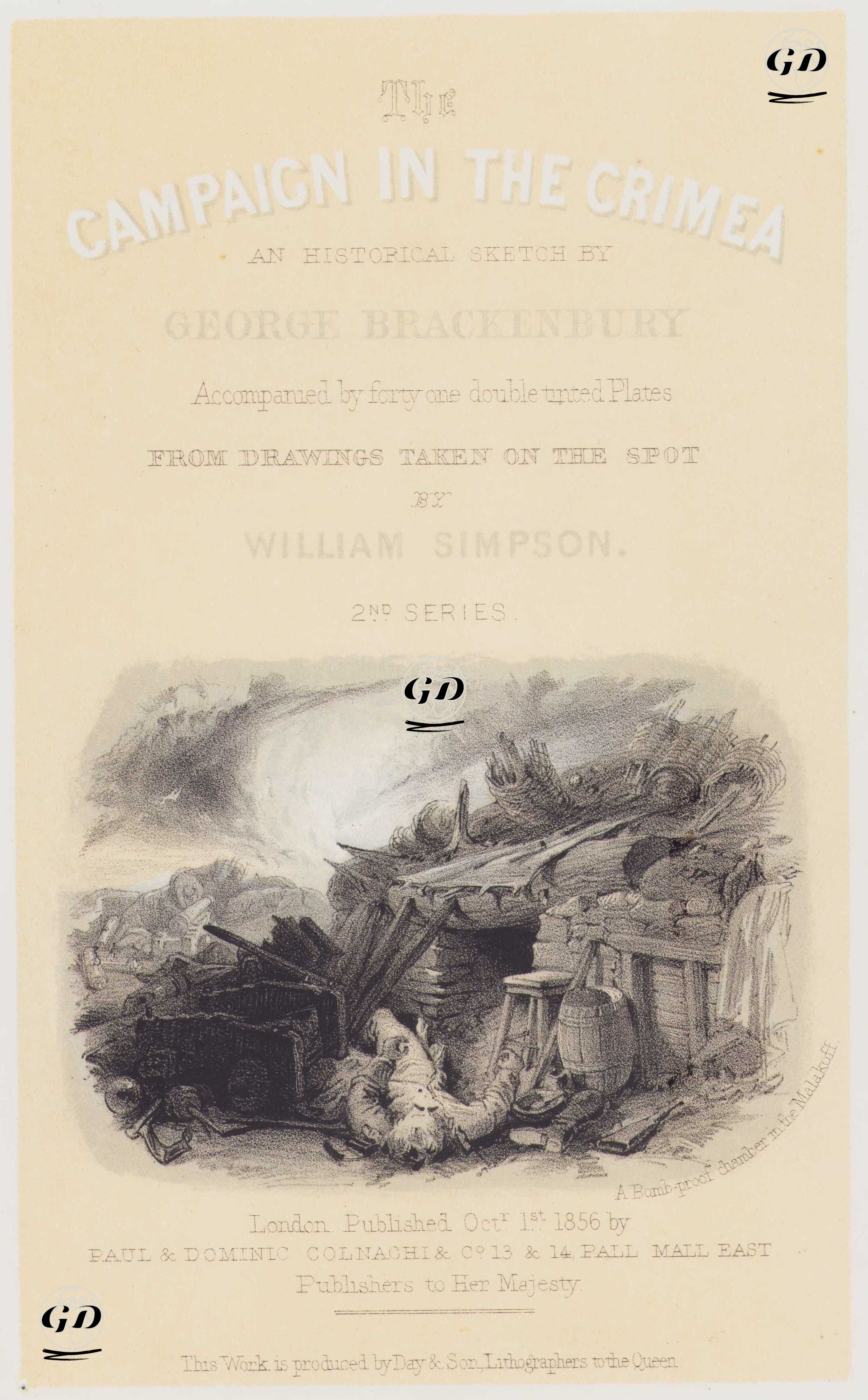
| Source | The Campaign in the Crimea: An Historical Sketch by George Brackenbury, London, Published Oct. 1, 1856 by Paul & Dominic Colnaghi & Co., Day & Son Lithographers to the Queen |
The Siege of Malakoff (1854–1855), one of the most critical phases of the Crimean War, played a decisive role in the defense of Russia’s strategic Black Sea port of Sevastopol. The Malakoff Redoubt was the most important fortification of the Russian defensive lines, and its capture by the French army on September 8, 1855, forced the fall of Sevastopol and the evacuation of the city by the Russian army. This development radically changed the course of the war, giving the Allies a decisive advantage. This engraving, which serves as the book’s main title page and a symbolic frontispiece, depicts a bombproof shelter used by soldiers during the Siege of Malakoff. The Campaign in the Crimea is a pioneer of 19th century war narratives in terms of its artistic, journalistic and documentary aspects. The fact that it was published with the permission of the Queen of Britain increased the prestige of the work. The lithography of the sketches drawn in the field by William Simpson, one of the first war painters to observe the war in person after being sent to Crimea in late 1854, and the narration by George Brackenbury gave this book and its images historical and literary importance.