GRAVÜR DÜNYASI
Digital Engraving Library
| Artist | Henri Felix Emmanuel Philippoteaux (1815–1884) |
| Engraver | Roze |
| Date | 1860's |
| Technique | Steel Engraving |
| Category | Military |
| Source | Publie Par Dufour, Mulat Et Boulanger |
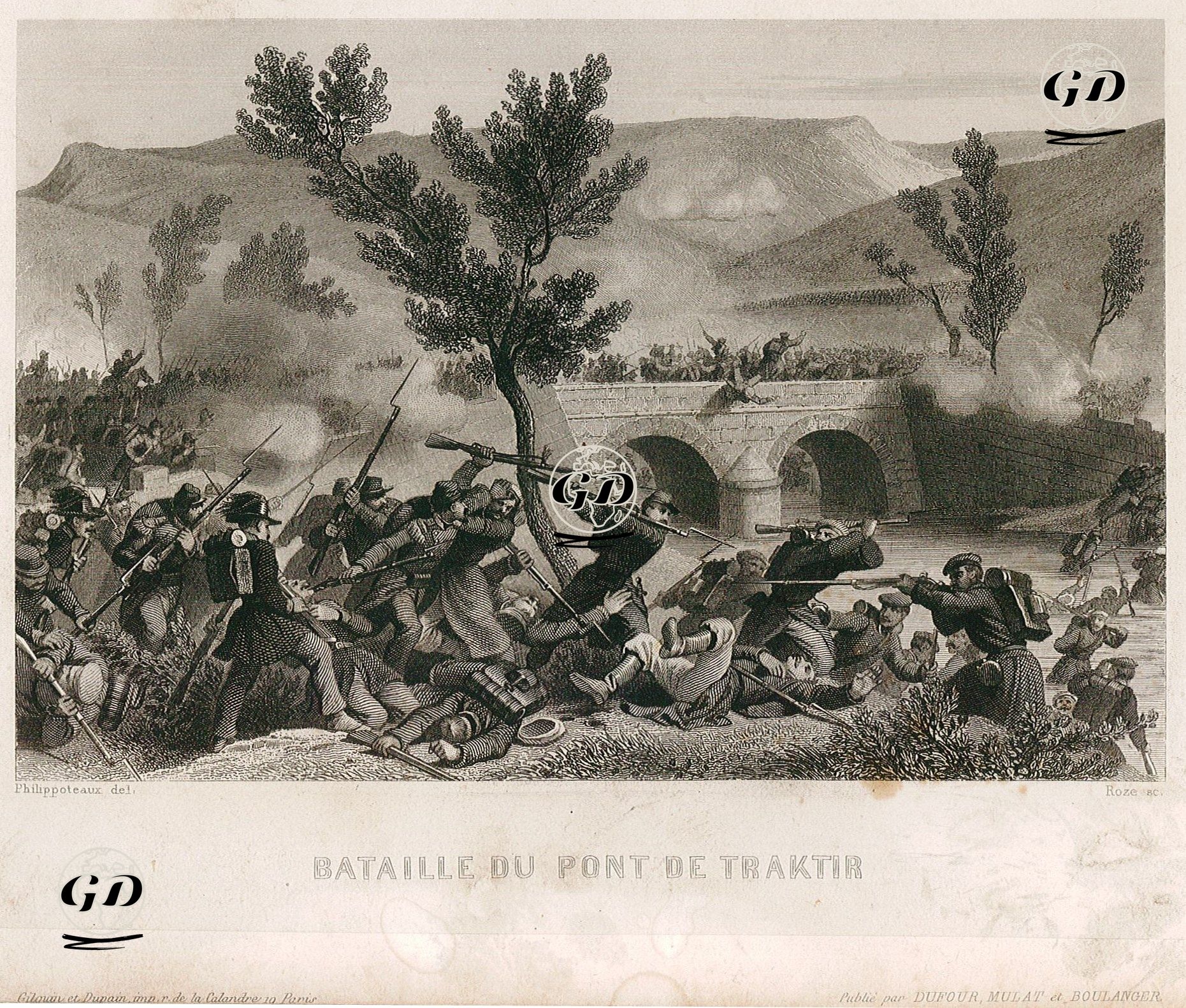
This impressive battle engraving depicts one of the last major land engagements of the Crimean War, the Battle of the Traktir Bridge, which saw the Allies (France and the Kingdom of Sardinia) triumph over Russian forces on 16 August 1855. While the siege of Sevastopol was still ongoing, the Russian army launched a massive counter-attack under the command of General Mikhail Gorchakov to break the siege. The aim was to cross the Chernaya River, break through the Allied lines and end the siege. In the battle, which took place in the valley of the Chernaya River, southeast of Sevastopol, the French under General Aimable Pélissier and the Sardinian (Piedmontese) forces under General Alfonso La Marmora held their defensive positions and repelled the Russian attacks. This was the last major Russian offensive, and its failure hastened the end of Sevastopol. In the foreground of the engraving, French or Sardinian troops are depicted during a bayonet charge, and the physical movements of the soldiers in combat, the violence and chaos of battle, and the figures of soldiers falling, running away, or injured are reflected with realism. In the middle of the engraving, intense fighting is depicted on and near the two-arched Traktir stone bridge over the Chernaya River, which symbolizes the strategic crossing line.